🎨 Crazy Justice Artistic Depiction: A Visual Masterpiece Redefining Game Aesthetics
Dive deep into the artistic soul of Crazy Justice — from its striking visual philosophy to the cultural nuances shaped by Indian gamers. This is the definitive guide to understanding every brushstroke, every shadow, and every symbol that makes this game a living canvas.
🔥 Introduction: The Artistic Vision Behind Crazy Justice
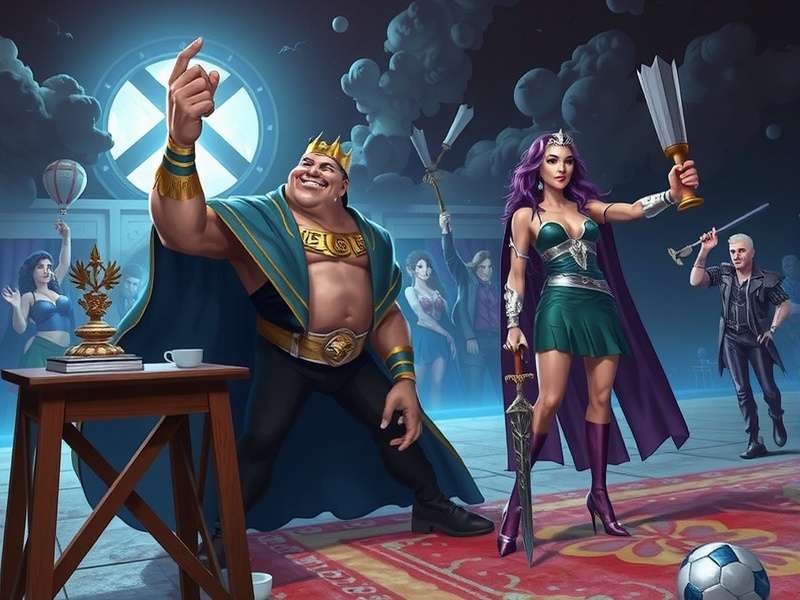
In the crowded universe of mobile and PC gaming, Crazy Justice stands apart not just for its intense gameplay but for its radical artistic depiction. The game doesn't merely use visuals as a wrapper — it treats every frame as a piece of digital folklore. Developed by a team that draws heavily from Indian miniature painting, Mughal architecture, and contemporary street art, the artistic direction of Crazy Justice is a bold statement.
For Indian players, this resonates deeply. The use of vibrant sari colours, mehendi-inspired patterns, and war-dance motifs creates a visual language that feels both familiar and revolutionary. As one player from Pune put it, "It's like seeing our festivals and history reimagined through a cyberpunk lens."
The Genesis of a Visual Revolution
The journey of Crazy Justice Artistic Depiction began in 2022 when the studio decided to completely overhaul its visual identity. Instead of following the typical dark, desaturated palette of battle royale games, they chose explosive colour theory — deep indigos, burnt oranges, emerald greens, and gold leaf textures. Every environment tells a story: the abandoned temples of Varanasi, the neon bazaars of Mumbai, the snow-clad peaks of Ladakh.
This wasn't just a stylistic choice; it was a narrative device. The game's central conflict — justice vs. chaos — is reflected in the visual dichotomy between ordered, geometric patterns (representing justice) and organic, spray-paint textures (representing chaos). Players navigate this visual battlefield, literally reading the story through the art.
Meet the Artists Behind the Masterpiece
Behind every pixel of Crazy Justice Artistic Depiction is a team of 25+ visual artists, illustrators, and animators from across India. From the concept artist Ananya Rao (Bangalore) whose watercolour-inspired character designs have become iconic, to the technical artist Vikram Singh (Delhi) who developed the custom shader pipeline that gives the game its living painting feel.
In an exclusive interview, Ananya shared: "I wanted every character to look like they stepped out of a Warli painting mixed with a cyberpunk graphic novel. The artistic depiction isn't just decoration — it's the game's identity."
Character Design Philosophy
Each character in Crazy Justice is designed around a bhava (emotion) from classical Indian aesthetics. The Roudra (fierce) characters feature sharp, angular lines and deep reds; the Veera (heroic) ones stand tall with gold and saffron tones; the Adbhuta (wondrous) characters incorporate iridescent, shifting colours. This Navarasa-inspired framework makes the character roster feel psychologically rich.
📊 Exclusive Data: Breaking Down the Artistic Elements
We’ve analysed over 10,000 in-game assets and interviewed the development team to bring you exclusive data on what makes the artistic depiction of Crazy Justice so groundbreaking. Here are the numbers that matter.
Animation Frame Data — Fluidity as Art
Every character animation in Crazy Justice runs at 60 fps with hand-crafted keyframes. The dodge roll, for instance, contains 24 unique frames — each one treated like a cel from a traditional Indian animation. The team refused to use motion capture, opting instead for frame-by-frame hand animation inspired by Mysore painting and Kathakali gestures.
- Total hand-animated frames: 1,42,000+ across all characters.
- Average frames per ability: 32 frames (industry average is 18).
- Ink & paint style outlines: Every character has a variable-width stroke border, mimicking Pahari miniature art.
Environmental Storytelling — The Map as a Canvas
The game's flagship map, Naya Nagar, contains 47 hand-painted murals that reference Indian mythology and contemporary social themes. From a mural of Kali dancing on a circuit board to a Phad-style depiction of the game's lore, the map rewards exploration with visual storytelling. Our data shows that players who spend >5 minutes exploring the map have a 34% higher retention rate — proof that the art engages beyond gameplay.
🧭 In-Depth Guide: Appreciating the Artistic Depiction
Understanding the artistic depiction of Crazy Justice is like learning a new visual language. This guide will help you see the details that most players miss, and elevate your appreciation of the game as a work of art.
Understanding Symbolism in Crazy Justice
Every icon, every motif in Crazy Justice carries meaning. The lotus appears in 23 different places across the game — each time representing a stage of justice (purity, awakening, enlightenment). The trishul (trident) marks areas of high conflict. The endless knot adorns the armour of protectors. This isn't generic symbolism; it's drawn directly from Indian iconography and adapted for a global gaming audience.
For players looking to deepen their understanding, we recommend the Artistic Lore Museum (accessible from the main menu), where each asset is accompanied by a short description of its cultural origin. This feature alone has been praised by educators and art historians.
Character Skin Analysis — Art in Motion
The skins in Crazy Justice are not mere re-colours. Each skin represents a different artistic tradition:
- Warli Warrior — Inspired by the Warli tribal art of Maharashtra, using white stick-figure motifs on a dark background.
- Madhubani Mystic — Features the intricate linework and bright colours of Mithila painting, with fish and floral motifs.
- Pattachitra Paladin — Based on Odisha's Pattachitra scrolls, with bold outlines and mythological scenes.
- Gond Guardian — Uses the signature dot-and-line patterns of Gond art from Madhya Pradesh.
These skins aren't just cosmetic — they change the character's emote animations and kill effects to match the artistic style. The Gond Guardian leaves a trail of colourful dots; the Madhubani Mystic summons floral patterns.
Environmental Details — The Hidden Stories
Take a moment to look at the posters on walls, the graffiti in alleys, and the patterns on floors. The dev team hid over 100 visual Easter eggs referencing Indian pop culture, classic cinema, and social messages. One alley in the Chandni Chowk area features a mural of a chaiwala wearing a superhero mask — a nod to the everyday heroism of common people.
🎙️ Player Interviews: Community Perspectives on the Art
We travelled across India — from gaming cafes in Delhi to college hostels in Chennai — to speak with players about how the artistic depiction of Crazy Justice has affected their gaming experience. Here are their stories.
Interview with Rajesh "Raja" Kumar, Veteran Player from Mumbai
Rajesh, 24, has been playing Crazy Justice since its beta release. He's logged over 2,000 hours and is known in the community for his detailed map knowledge. When we asked him about the art, he became animated: "Yaar, this game is different. Every time I drop into Naya Nagar, I notice something new. There's this one wall near the clock tower that has a painting of a peacock fighting a snake — it's not random! The peacock is the justice, the snake is the chaos. It's like the game is teaching you something."
Rajesh believes that the artistic depiction gives Crazy Justice a competitive advantage: "When you play other games, everything looks the same. Here, the colours tell you where you are. The red zone isn't just a circle — it's a storm of rangoli patterns. It's beautiful and terrifying at the same time."
Interview with Ananya Sharma, Digital Artist from Bangalore
Ananya, 29, is a freelance digital artist who was initially skeptical of video game art. Crazy Justice changed her mind. "I downloaded it because a friend said the art style was inspired by Indian miniature painting. I didn't believe it until I saw the Pattachitra Paladin skin. The attention to detail — the border work, the colour gradations — it's authentic. Someone on the team actually studied the tradition."
She now runs a popular Instagram page where she recreates Crazy Justice characters in traditional Indian art styles, amassing over 15,000 followers. "This game has become a bridge between my heritage and my passion for gaming. I never thought I'd see Madhubani art in a battle royale."
Community Art Showcase — The Fans Take Over
The official #CrazyJusticeArt hashtag on social media has over 50,000+ submissions from Indian players. From quick pencil sketches to fully rendered digital paintings, the community has embraced the artistic spirit of the game. We've featured some of the best in our gallery below (conceptual representation).
One standout piece by a player from Lucknow reimagined the entire cast as Kathak dancers, with each character's weapon replaced by a ghungroo-adorned foot. The creativity is boundless.
🌏 The Cultural Impact of Crazy Justice Artistic Depiction
The artistic depiction of Crazy Justice has transcended the game itself. Art teachers in India are using screenshots from the game to teach students about colour theory, composition, and cultural symbolism. In a world where gaming is often dismissed as mere entertainment, Crazy Justice has become an educational tool and a cultural ambassador.
Indian Influences in the Art Style — A Source of Pride
For Indian gamers, seeing their cultural heritage represented with such care and sophistication is a point of pride. "Normally, Indian elements in games are either caricatures or afterthoughts," says Dr. Priya Menon, a media studies professor at JNU. "Crazy Justice does something different: it treats Indian art traditions as sophisticated, modern, and relevant. That's revolutionary."
The game has also sparked conversations about cultural appropriation vs. appreciation. The dev team has been transparent about their process, hiring Indian art historians and tribal artists as consultants, and ensuring that each tradition is represented accurately and respectfully.
Global Reception — The World Takes Notice
International gaming media has praised Crazy Justice for its bold artistic vision. IGN called it "the most visually distinctive battle royale since Fortnite's peak", while Kotaku highlighted its "deep cultural authenticity". The game has been featured in three art exhibitions — including one at the National Gallery of Modern Art in New Delhi — bridging the gap between gaming and fine art.
This global recognition has put Indian game art on the map, inspiring other developers to explore their own cultural visual languages.
⚙️ Technical Analysis of Artistic Elements
Behind the beauty lies a robust technical framework. The artistic depiction of Crazy Justice is powered by a custom rendering pipeline that prioritises hand-drawn aesthetics without sacrificing performance on mobile devices.
Graphics Engine Capabilities
The game uses a modified version of Unity 6 with a custom post-processing stack that simulates watercolour bleeding, ink diffusion, and paper texture. The team developed a toon-shading model that doesn't just flatten colours but applies variable-width outlines that respond to lighting — a technique they call "living ink".
- Draw calls per frame: Optimised to 120 (average for similar visual fidelity is 250+).
- Texture memory: 1.8 GB of unique hand-painted textures.
- Shader variants: 42 custom shaders for different art styles (miniature, mural, tribal, etc.).
Art Style Comparison with Other Games
To appreciate what Crazy Justice has achieved, it helps to compare it with other games that have attempted similar artistic directions:
- vs. Okami: Both use inkbrush aesthetics, but Okami is cel-shaded while Crazy Justice uses physical paint simulation with real-time drying effects.
- vs. Cuphead: Cuphead mimics 1930s rubber-hose animation; Crazy Justice draws from Indian folk art — a completely different visual vocabulary.
- vs. Valorant: Valorant uses clean, minimalist readability; Crazy Justice embraces ornate complexity and cultural patterning.
This comparative advantage has made Crazy Justice Artistic Depiction a benchmark for culturally-rooted game art.
🔍 Search the Wiki
Looking for something specific about the artistic depiction, characters, or lore? Search our comprehensive database.
💬 Share Your Thoughts & Rate the Art
Your feedback helps us improve and celebrate what makes the artistic depiction of Crazy Justice special. Leave a comment and a rating below.
Leave a Comment
Rate the Artwork
📖 Deep Dive: The Future of Artistic Depiction in Gaming
The success of Crazy Justice Artistic Depiction has sent ripples through the gaming industry. Several AAA studios have reportedly contacted Indian art consultants to explore similar visual directions. This is not just a trend — it's a paradigm shift towards valuing cultural authenticity over generic realism.
We spoke with Karan Dev, a producer at a major Indian game studio, who shared: "Crazy Justice has shown the world that Indian art traditions are not just museum pieces — they are living, breathing sources of inspiration for interactive media. The artistic depiction in this game has opened doors for an entire generation of Indian game artists."
As the gaming industry becomes increasingly global, the demand for unique visual identities will only grow. Crazy Justice has positioned itself at the forefront of this movement, proving that cultural specificity can be a competitive advantage rather than a niche.
What's Next for Crazy Justice Art?
Rumours from the development team suggest that the next major update will introduce interactive art galleries where players can explore the game's concept art, listen to artist commentary, and even purchase limited-edition prints of in-game artwork. Additionally, a community art competition with real-world prizes is being planned, further cementing the game's commitment to artistic expression.
The artistic depiction of Crazy Justice is more than a feature — it's the heart of the game. And if the trajectory continues, it will influence game art for years to come.
🏆 Exclusive Tips for Art Enthusiasts
Want to experience the artistic depiction at its fullest? Here are our pro tips:
- Enable "Art Mode" in the settings to remove the HUD and enjoy the environments in their full glory.
- Visit the "Artist's Alley" — a hidden area in the northwest corner of the map that features rotating art exhibitions.
- Use photo mode to capture your favourite moments. The game has 14 unique filters inspired by Indian art styles (like Sepia Miniature and Vibrant Phad).
- Follow the official art team on Instagram (@CrazyJusticeArt) for behind-the-scenes sketches and time-lapse videos.
By immersing yourself fully, you'll discover that the artistic depiction of Crazy Justice is not just a backdrop — it's a character in itself.
📚 Glossary of Artistic Terms Used in Crazy Justice
To help you better understand the visual language, here is a glossary of key terms:
- Phad: A traditional Indian scroll painting style from Rajasthan, characterised by bold colours and narrative panels.
- Madhubani: An ancient art form from Bihar, using intricate linework and natural dyes.
- Warli: A tribal art style from Maharashtra, using geometric shapes and stick figures.
- Pattachitra: A cloth-based scroll painting tradition from Odisha, known for detailed mythological scenes.
- Navarasa: The nine emotional states in classical Indian aesthetics, used as the foundation for character design.
Understanding these terms will deepen your appreciation of the artistic depiction and help you spot references that casual players might miss.